Before the 1994 Rwandan genocide, Akagera National Park was awash with a variety of wildlife, and some of its star attractions included lions and black rhinos.
Back then, more than 50,000 wild animals – including some 300 lions – roamed the park that spanned some 2,700 sq kilometres. The wide range of wildlife, coupled with staggeringly scenic landscapes, made Akagera National Park a dream African Big Five destination for wildlife enthusiasts from the region and beyond.
But one of Africa’s most scenic national parks – Rwanda’s counterpart to the famous savanna reserves of Tanzania and Kenya – took the beating when the country descended into the grotesque genocide that left an estimated one million people dead and its wildlife in shreds.
By 2000, human encroachment had taken a heavy toll on the once vibrant Akagera National Park due to an influx of former Rwandan refugees returning from neighboring Uganda and Tanzania.
The park was reduced to only 1,112 sq kilometres, and just less than 4,000 animals called it home. And the crowd-pulling rhinos and lions were wiped out completely.
Yet, be that as it may, the genocide had decimated almost everything in Rwanda, and at the time the revival of the park seemed less of a priority as the new government’s to-do list was staggeringly overwhelming.
The country’s economy was in tatters. Remnants of the Interahamwe militia were still lurking in the shadows. Traumatized widows and orphaned children needed all the help they could get. And unity and reconciliation was another uphill task.
Akagera National Park’s renascence
But as the country began to rise from the abyss – registering a remarkable turnaround in almost all spheres – the government shifted its focus towards the revival and conservation of the country’s flora and fauna.
In 2005, Nyungwe National Park was created in the southwestern part of the country to protect the region’s largest tract of montane rainforest and its inhabitants, which include 13 primate species.
In the same year, Kwita Izina, an annual baby gorilla-naming and conservation ceremony, was introduced to highlight the plight of the critically endangered mountain gorillas that reside in Rwanda’s Volcanoes National Park, north of the country.
Akagera National Park was next. In 2009, the Rwandan government inked a partnership deal with African Parks to manage the park. The Akagera Management Company was subsequently formed as a joint venture between the government and African Parks.
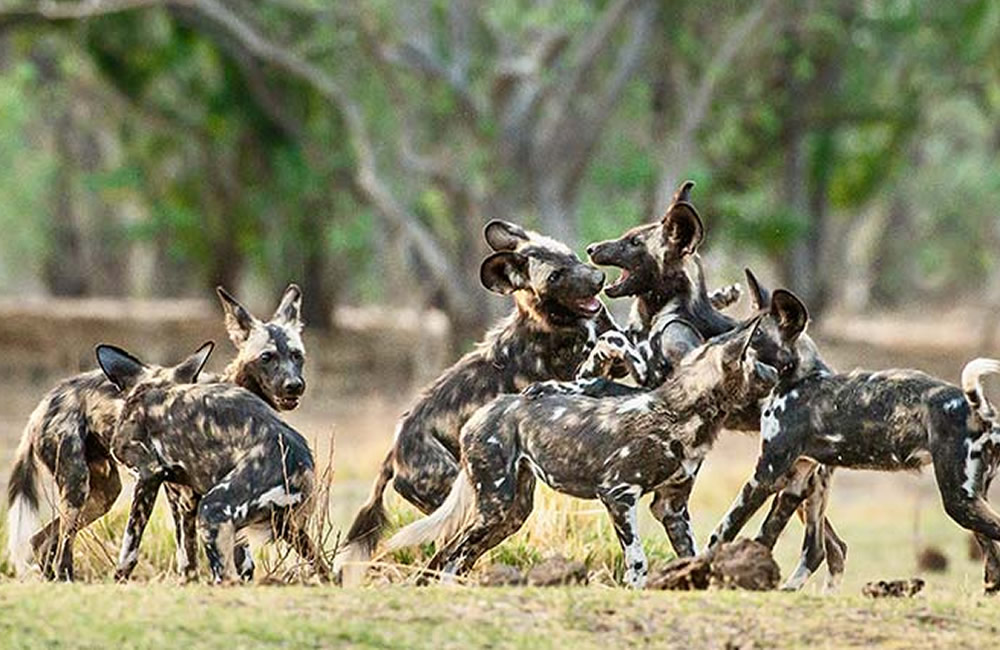
The new management was charged with curtailing poaching and illegal hunting, restoring the park’s ecosystem by reintroducing lions, the African wild dog and rhinos, reducing human-wildlife conflict, attracting more tourists to the park and subsequently increasing the park’s revenues, among other tasks.
African Parks began with fencing the entire park and enlisting and training rangers to halt encroachment, poaching, illegal hunting and human-wildlife conflict, a move that quickly produced positive results.
By 2017, Akagera National Park’s wildlife populations had increased from a mere 4,000 in 2010 to 12,000 individuals, according to Joseph Karama, Akagera National Park’s community manager. And despite its dwindled size, the park still can host up to at least 30,000 animals, Karama says.
The park currently employs 60 rangers who undergo intense training at least once every year to keep up with the ever-innovative poachers and Akagera National Park’s increasing wildlife populations.
And they are succeeding. According to Karama, poaching has reduced drastically in the last five years, from over 400 cases in 2014 to less than 20 in 2017.
Aggressive marketing also led to a significant increase in park visits – from less than 10,000 in 2010 to 37,000 visitors in 2017. Revenues also skyrocketed from a paltry $200,000 in 2010 to $1.6 million in 2017.
And the upward spiral continues. “In fact,” says Karama, “we have made over $300,000 in August 2018 alone.”
The return of lions and rhinos
In 2015, a pride of seven lions was translocated from South Africa and reintroduced to Akagera National Park, and that number has since grown to 22 individuals and “we expect to have at least 50 lions roaming the park in the next two years,” says Karama, who joined the Akagera Management Company team in 2014.
The reintroduction of lions in the park inspired Rwanda also to reintroduce the black rhino. In 2017, Akagera National Park once again sought support from South Africa and 18 black rhinos we reintroduced to its wilds, making the park a bona fide African Big Five destination.
The rhinos, which are currently numbering 19 individuals, are not yet easy to spot on a game drive in an open-toped game-viewing vehicle, but the other four of the big five – elephants, buffalos, lions and leopards – can easily be seen although it’s the night game drives that usually produce sightings of the elusive leopards.
There are also several other species of animals to look out for, including zebras, Maasai giraffes, antelopes, hippos, Nile crocodiles, baboons, monkeys and warthogs, among others.
Now tourists can also take a boat ride on Lake Ihema, the biggest of the 11 lakes in the park, and see several species of water birds that are abundant here, including the African jacana, fish eagles, kingfishers, papyrus gonoleks, white-winged warblers, blue-headed coucal and marsh flycatcher squacco herons, purple herons and Rufous-bellied herons.
Where to stay in Akagera National Park
Akagera National Park now offers a range of accommodation facilities catering to both high-end and budget travellers. Rusizi Tented Camp, which charges in the upwards of $280 per night, is the newest luxury lodge in the park and plausibly the most popular among high-end travellers.
The facility nestles on a patch of riparian woodland on the shores of the scenic Lake Ihema, offering guests a jungle alternative to the moderate Akagera Game Lodge, which is also currently under refurbishment following a takeover by Adrian Gardiner’s Mantis Group.
Akagera Game Lodge currently charges $120 per room per night, but this figure will likely shoot up to about $200 per night once the facility is relaunched, according to Daniel Niyishimye, chairman of the Akagera Community Freelance Guides Co-operative.
Niyishimye’s organisation runs the Ihema View Campsite, which offers visitors camping options at $30 per night. Niyishimye and co. also organise cultural activities for tourists, including homestays and banana beer making and tasting, among others.